Thursday, 24 May 2012

New on our news page


The summer music festival season starts this weekend. We select the less-carboned, solar-powered, up-cycled, educational, chilled and frenzied green ones.

In Dorset, artists walk and talk with people who use their feet (26 bones) or their hands (27 bones) to work with or to investigate the Jurassic Coast.

In Bath, FAB, the Fringe Arts Bath Festival, starts this week-end, with themes of Sustainable Earth and Metamorphosis.

We've added the ecologist Wendell Berry's National Endowment for the Humanities Lecture, 'It All Turns on Affection', to our online essays.

In London, there's an alternative Rio+20 conference; an exhibition on the anthropocene; and an evening sharing food growing stories from Ljubljana, Havana, Chiapas in Mexico and Jaos in Palestine.

image above from the Isle of Wight festival
more ...

Wednesday, 23 May 2012

Tom Toles wedding cartoon

Copyright (c) The Washington Post
Kellie Gutman writes:


Pulitzer-Prize-winning Washington Post cartoonist Tom Toles' latest cartoon on climate change.

Toles has been nominated three times for the Pulitzer Prize in Editorial Cartooning, winning in 1990.  He replaced the legendary cartoonist Herblock at the Washington Post in 2002. Toles' cartoons are syndicated in over 200 newspapers.  He is known for tackling complicated subjects such as environmental issues.  He often includes a small doodle, a caricature of himself, in the corner.
more ...

Tuesday, 22 May 2012

U.S. Energy Secretary Chu on The Avengers


Kellie Gutman writes:

Steven Chu, the 12th Secretary of Energy for the United States, has a post on his Facebook page about the new movie, The Avengers. Though his friends are not listed, he does have 18,963 'likes' on his page. Chu lists his job:

As Secretary of Energy, proudly carrying out President Obama's ambitious agenda to invest in alternative and renewable energy, reduce our dependence on foreign oil, and create millions of new jobs. 

About The Avengers  he says:

'[It] focuses on a new, limitless clean energy source called 'The Tesseract."... While the "Tesseract" may be fictional, the real-life global competition over clean energy is growing increasingly intense, as countries around the world sense a huge economic opportunity AND the opportunity for cleaner air, water, and a healthier planet...'

more ...

Monday, 21 May 2012

Talking about climate change

Jason's story
Wallace Heim writes: 

One of the explanations offered for why climate change is not more prominent in people’s thinking is that it’s not physically seen. It doesn’t feel ‘real’ enough.

But a different view comes out in the stories people tell about how climate change is immediately altering their everyday lives. The climate is changing how they feel about the world and their decisions about what to do.

Project ASPECT, based at University College Falmouth, is gathering people’s stories about climate change from individuals and communities in Wales, northern England, London and Cornwall. Building a digital narrative archive, they are capturing on DVD how people talk about the climate in the context of their everyday lives.

There are those who watch. Heather continues the diary her mother started, recording every day what work is done on the family farm and the weather. Duncan and Matt are surfers in Cornwall, watching the storms. There are those who work with renewable energy, or, like Hanna, find green jobs for young people. Many are changing the way they grow food and eat: Mary from Incredible Edible; Owen with his backyard in Peckham; and masked night-time Ninja guerrilla gardeners. Singers, rappers, athletes tell their stories. Spontaneous acts of community kindness sit alongside the meticulous work of digitising the weather reports from World War I ship’s logs.

In these stories of everyday life, there is a cultural reality emerging, soft-voiced, but pressing. 
more ...

Thursday, 17 May 2012

A new chapter

Malcolm Bull on climate change ethics

"Climate ethics is not morality applied but morality discovered, a new chapter in the moral education of mankind. It may tell us things we do not wish to know (about democracy, perhaps), but the future development of humanity may depend on what, if anything, it can teach us."
more ...

Wednesday, 16 May 2012

New on our news page

Wasteland twinning: Nottingham and Yogyakarta

At the Brighton Fringe, The Ship's Log of songs marks the progress of the Boat Project by Lone Twin, and Feral Theatre perform three pieces on freedom, love and extinction.

OIL, photographs by Edward Burtynsky chronicling the oil industry, opens the new Photographers' Gallery.

A pop-up cinema at the edges of the Olympic Park hosts an evening of films on animals, cattle, herding and whaling.

Nottingham's wastelands are twinning with the wastelands of Yogyakarta, Indonesia. Artists are making the connections.
more ...

Tuesday, 15 May 2012

Six films on culture and climate change

About Water - 2007 a film about our precarious relationship with water
Kellie Gutman writes:


Filmbase, in Dublin, is presenting climate.culture.change,  a series of films from six European countries, and discussions, through 12 June on culture and climate change. A collaboration between Cultivate and the EUNIC European cultural partners: Goethe Institut, British Council, Austrian Embassy, Alliance Française and the Italian Institute of Culture, with additional funding from the European Commission, this film and discussion series is a lead-up to Rio +20, the 20th anniversary of the Earth Summit in Rio de Janeiro.

Information on the program available here
more ...

Monday, 14 May 2012

Carbon-lite touring

The Last Polar Bears on tour
Wallace Heim writes: 

The carbon footprint of a production meets the content of the play in the National Theatre of Scotland’s tour of their climate change play The Last Polar Bears. For the 350-mile tour, everything needed for the show will be carried by the cast and crew on bicycles made from reclaimed bikes. The vinyl panniers are made from recycled National Theatre of Scotland banners.

As part of the production’s legacy, the National Theatre of Scotland will donate to the World Wildlife Fund's Adopt a polar bear project on behalf of the 18 primary schools on the tour.

Alongside the production, director Joe Douglas will use the tour to interview people, ‘taking the temperature of how people are feeling about climate change.'
more ...

Friday, 11 May 2012

Floating platforms

A new study shows that plastic in the Pacific Ocean has increased 100 times over the last 40 years.

The only beneficiary, reports The Economist, is Halobates sericeus, "a small insect that now has lots of nice little floating platforms on which to lay its eggs".
more ...

Thursday, 10 May 2012

Good topic

From the London Review of Books

In the next issue, which will be dated 24 May, Malcolm Bull on the intergenerational politics of climate change.

more ...

Friday, 27 April 2012

Soap operas for social change

The Archers, courtesy BBC
Kellie Gutman writes;

The BBC have looked into soap operas as agents for social change and have discovered in some cases they have changed the world.  From the longest-running program, The Archers, which encouraged farmers in the 1950s to increase production by trying out new techniques, to a BBC radio program in Afghanistan, called New Home, on women's rights, which taught listeners how to avoid land mines, the soap opera has had a significant influence.

A two-part programme on Your World (part 1, 21 April; part 2, 28 April) can be heard here.
more ...

Monday, 23 April 2012

New on our news page

from Noye's Fludde

The comedy Thin Ice is inspired by the  'weather wars' between Britain and Germany over Arctic bases for predicting weather patterns and involves a thawing body.

In Wales, young people give a climate changing update to Benjamin Britten's Noye's Fludde.

Paradise Lost is the inspiration for a new church opera by Jonathan Dove, The Walk from the Garden, at the Salisbury Festival.

In Brussels, KAAI Theater hosts five days of performances, films, exhibitions and talks on cities, food, bicycles, farms, extinction, bees, rivers and the sound of pollen.

Make do and mend it at a symposium in the Lake District.

Proposals are wanted for a residency in Andalucía showing how the environment reacts to light in the desert.

Storytellers are walking to Canterbury. The call is out for new, green Canterbury Tales for the journey.
more ...

Friday, 13 April 2012

New on our news page

from Occupy Everything by kennardphillipps

Science, theatre and population will get added together in Ten Billion at the Royal Court, directed by Katie Mitchell.

Sport and art meet the mountain in NVA's Speed of Light. Runners are in training while ticketing opens for the walking audience.

The graphics of Occupy Everything by kennardphillips are on show in London.

In Liverpool, twelve artists send work back from the Galápagos.

'Hinterlands' explores a Welsh landscape in a workshop on movement and environment.

David Abram's talk at the Sensory Values event in Edinburgh is online.
more ...

Thursday, 29 March 2012

New on our news page

'Take the money and run' reading group

The Dark Mountain Project moves north with a festival in Scotland in April, and a lecture in Falmouth by Dark Mountain's Paul Kingsnorth is now a podcast.

Headphones on: The Tate à Tate Audio Tour is available to download. It's three alternative guides to the Tate collections and their sponsorship by oil corporations.

A webcast conference on sustainable practice in the theatre springs from Minneapolis.

In Edinburgh, the Science Festival hosts three talks by climate scientist James Hansen, along with events on food, foraging and dance.

PLATFORM's Jane Trowell and the Live Art Development Agency 'take the money and run' in a series of reading groups on ethics, art and sponsorship. photo above

Other new courses include urban permaculture in Salford and Body/Landscape in Scotland.

Two exhibitions are coming up from Cape Farewell: HEVVA! HEVVA! by students on the Cornwall Short Course at the Eden Project; and in Paris, Carbon 12, pairing artists with climate scientists.
more ...

Monday, 26 March 2012

SHINSAI: Theaters for Japan

Practicing for SHINSAI. Photo Erin Baiano/Licoln Center Theater
Kellie Gutman writes:

A unique event took place at 69 theatres across the United States on March 11, the one-year anniversary of the devastating Japanese earthquake.  Called SHINSAI - the Japanese word for an earthquake disaster - it was a series of readings of ten-minute plays to raise funds for the Japan Playwrights Association.

Some theatres held one or two readings before their normally scheduled productions; others made an evening of presenting many of the plays and songs put together for the event.  More than half of the plays have to do with the environmental disaster in Japan. To read the plays, register here

The Theatre Communications Group helped to organize SHINSAI. Japanese and American playwrights wrote works for the event; Stephen Sondheim and John Weidman reworked two songs from their 1976 musical Pacific Overtures. All plays were to be presented only on March 11.

National Public Radio did a story, which you can hear here.

Yoji Sakate, President of Japan Playwrights Association wrote:

Theater artists in Japan, centered around those living in the Tohoku region that was devastated by the great earthquake and nuclear accident, extend our hand to theater artists around the world to rebuild Tohuku and Japanese society, restoring the conditions that surround the art of theater, such as environments for creative activity, theater buildings, companies, rehearsal spaces, education and audiences.  We seek to work with our international peers to demonstrate the potential of human beings and the theater to overcome adversity as well as the primordial power of expression on stage.

more ...

Wednesday, 14 March 2012

First daffodil three weeks earlier


Kellie Gutman writes:

Our yearly collaboration with the Paideia School, in Atlanta Georgia has just wrapped up.  Each year they send a pre-written postcard, ready to be filled in with a date, for the first spotting of a blooming daffodil.  All of those who receive cards are within 5 miles of U.S. Route 1, which stretches from the southern tip of Florida to the northern tip of Maine.  As the cards return to the school, they are used by the  9- and 10-year olds to plot the advance of spring on a map.  When all the cards are in they use their maths skills to figure out the rate at which spring advances.

This year the winter was unseasonably warm on the east coast. In Boston, where the snowfall average is 41.3 inches, we have received only 9.1 inches.  This is only a tenth of an inch more than the least snowiest winter on record.  

Last year the first daffodil was spotted on April 5th.  This year it was three and a half weeks earlier on March 12.  We will have to wait until all the cards have been returned to see if spring in general was much earlier this year.

See also:
more ...

Monday, 12 March 2012

TippingPoint makes a step-change


Wallace Heim writes:

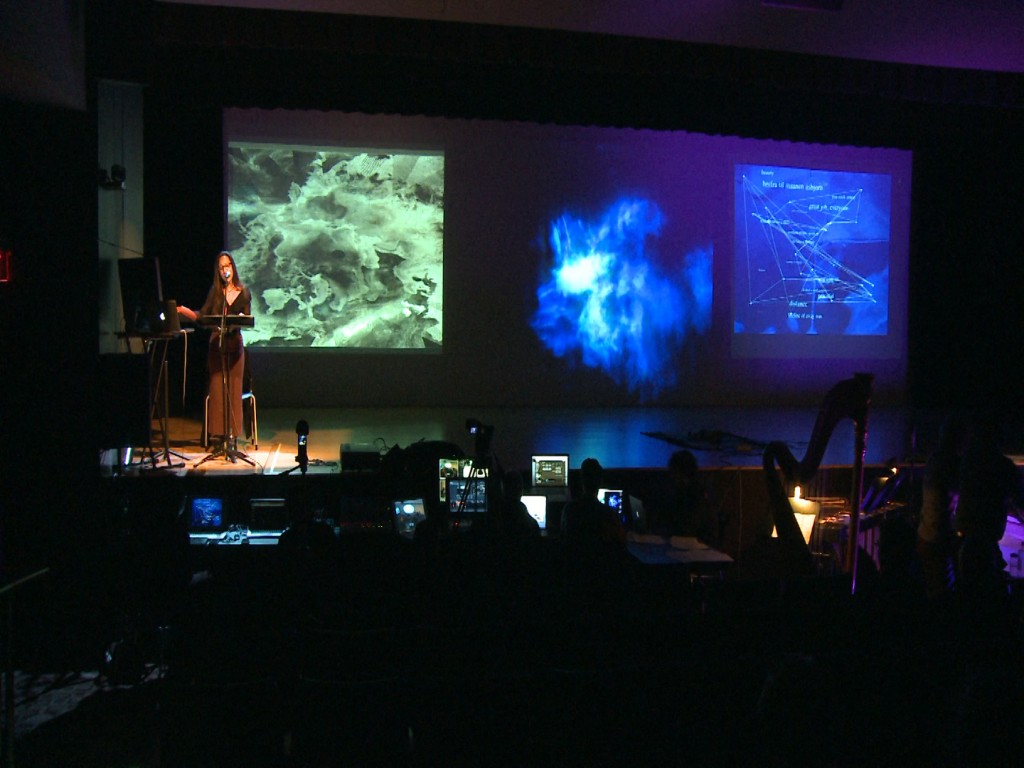
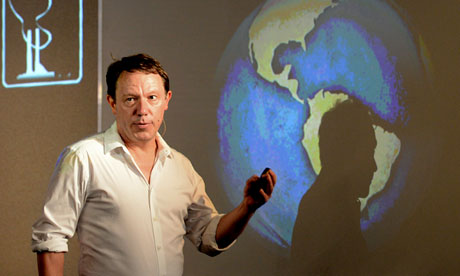
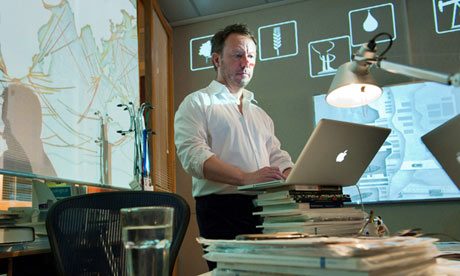
The TippingPoint last month, co-hosted by the Newcastle Institute for Research on Sustainability, made a step-change from previous TP events. Many of the same elements were there, but something shifted. Something sparked in the combination of TP’s open structure and those participants, those presentations, the talk, the room and the city. It felt as if many things were converging, and instead of being an event proposing or speculating that culture and the arts could be important responses to climate change, it was an event going with and propelling the diverse and energetic work that is being made, and being dreamt of.

The presentations in more conventional conference form, many now online, were provocative, each presenting a distinct direction and raising questions that filtered through the rest of the event. Kevin Anderson and Matt Ridley's heated head-to-head ("Two men slugging it out over data" as one participant named it) exemplified adversarial strategies and the ways in which the ‘deniers’ and those who accept the consensus views of science tend to define one another’s arguments, leaving a blank between them. It also brought out the difficulties of seeing and critiquing the rhetoric and argumentation in debates that rely on scientific data.

Lucy Conway presented the artwork that is the Isle of Eigg, and how the population there is realising low-carbon, high socially and culturally benefitted living. Ben Twist from Zero Carbon Scotland +TBD, introduced the problem of whether art can, or should, be linked to behavioural change. Erica Whyman from Northern Stage showed how the major cultural organisations in Newcastle are collaborating across their business and institutional interests, and building a network that could include developing plans for material sustainability. The idea of organisational collaboration returned in Alan Davey’s announcement of Arts Council England’s decision to embed environmental sustainability into its funding agreement.

On the last day, Sue Gill, of Dead Good Guides led everyone in singing a version of ‘All Things Bright and Beautiful’ before John Fox gave his reflections on the transitions in art-making from commercialised spectacle to vernacular art, to 'random acts of culture'. "Even if the markets fail, we must not tolerate the failure of imagination."

The three days were planned to allow for chance conversations and random mixing in small groups, like the ‘Show and Tell’ session, where participants bring an object with meaning for them relating to climate change. Some of these personal and emotive exchanges drifted into the wider discussions. The three Open Space sessions had themes, the first two mostly ignored: 'In what ways might I influence the future' and 'Exploring Possibilities', in favour of people’s more immediate concerns. The third, 'What am I going to do about the future', drew out dozens of groups talking about their projects, and help that could be given to them.

The openness of TP makes reporting back very subjective. It did feel as if something happened, more than presentations and networking. The unrepeatable, and well-facilitated, combination of the people, the ideas, the timing came together to make an event that showed and advanced the many edges of social and artistic action.

Audio recordings of the presentations, tweets, blogs, interviews and commentaries with participants and some of the evenings' entertainment are on Amplified. Photos above posted on Amplified by quitexander.
more ...

Wednesday, 7 March 2012

New on our news page

Competition opens for this year’s Nick Darke Award for environmental playwriting, screenwriting and documentary, with a prize of £6,000.

After Miss Julie is to open at the Young Vic in London, a ‘Classics for a New Climate’ production with Julie’s Bicycle, aiming to reduce the amount of electricity used from the national grid by 50% in the production of the show.

Alan Davey of Arts Council England announces that ACE will embed environmental sustainability in its funding agreements with Nationally Funded Organisations and Major Partner Museums.

A tent in Edinburgh this week houses discussions and workshops on ecology and art with students from 'Art, Space and Nature' at Edinburgh College of Art, and eco/art/scotland.

In London, the publication ATLAS: Geography, Architecture and Change in an Interdependent World will be launched at the Purcell Room, with geographer Doreen Massey, food urbanist Carolyn Steele, campaigner Andrew Simms and playwright Lemn Sissay.

At the Science Museum, London, architect Sunand Prasad, campaigner Martin Kirk and climate activist Cat Hudson will discuss how to get people to change their habits.
more ...

Thursday, 1 March 2012

The Browser says it all


 Best of the Moment

Global Warming Skeptics Are Wrong

William Nordhaus | NYRB | 27 February 2012
Yale economist rebuts sceptics' arguments, point by point. The earth is getting warmer. Due to carbon dioxide pollution. Humans are responsible. The science is legitimate. It's a bad situation. It's worth taking action

more ...

'The Great Immensity' does a 'Greenland'


In the last couple of years a number of plays about climate change have been staged in London from Steve Waters' The Contingency Plan to the multi-authored Greenland at the National Theatre and Richard Bean's The HereticThe Contingency Plan was funny, dramatic and accurate; Greenland was not very dramatic, not very funny and accurate; and The Heretic was very funny, quite dramatic and fairly inaccurate.

Meanwhile, this blog has been waiting since 2010 for the results of the substantial grant of $750,000 (£470,000) from the US National Science Foundation for a new play about climate change by The Civilians theatre company. The reviews for The Great Immensity are now in. It sounds as if it has made some of the same mistakes as Greenland.

So what happens in The Great Immensity? The set-up is that a character called Phyllis arrives at Barro Colorado Island, a rainforest and research reserve in the middle of the Panama Canal, in search of her twin sister Polly, a filmmaker who has suddenly disappeared. The researchers on the island help Phyllis reconstruct her sister’s last days through flashbacks, video interviews from Polly’s hard drive, and vaudeville musical sketches. Phyllis learns that Polly was engaged in a project to do with the upcoming Auckland Climate Summit. The action then moves to Churchill, Manitoba, where Earth Ambassadors and others disclose what happened to Polly.

Robert Trussell in the Kansas City Star calls it a “risk-taking show” and an “unwieldy cargo container of theatrical virtues and deficiencies”.

“Integrated into the narrative is alarming information about the plight of the planet. I’m not questioning the scientific information that forms this play’s foundation. My concern is how the show works as theatrical entertainment.”

Victor Wishna, in the KCMetropolis, an online journal of the performing arts, takes the view that what theatre does best is provoke, rather than educate or entertain. Although well-performed, he finds it a single-issue, educational show, with no subplots or diversions from the message of the irreversible damage that humans have done to the planet.

“Theatre-goers may very well leave The Great Immensity more frustrated and agitated than inspired. Unlike a lecture or even a documentary film, theatre isn’t expected to offer answers but to raise—to provoke—questions, to challenge assumptions, to take us from ‘There’s nothing to be done’ to ‘Isn’t there something we can do?’”

pic: from left: Rebecca Hart, Dan Domingues, Meghan McGeary and Todd Cerveris in 'The Great Immensity'  
more ...

Wednesday, 29 February 2012

Climate is culture


Kellie Gutman writes:


The feature article in the March issue of Nature Climate Change is written by Cape Farewell's David Buckland, and is titled Climate is Culture.


A pioneering project that was set up to bridge a perceived communication gap between the science of climate change and the deep societal changes required to avoid dangerous impacts is explained by its creator in Nature Climate Change this week.  In 2001, British artist David Buckland founded the Cape Farewell project, which he feels attempts to address one of the most pressing social issues of our time.


Read the full article here.

more ...

Friday, 17 February 2012

State of the Arts gets the environment


Wallace Heim writes: 

This week’s State of the Arts (SOTA) conference hosted by Arts Council England in Salford had, for the first time, two sessions on ‘Artists and our future environment’, with speakers James Marriott from PLATFORM; the writer Jay GriffithsMojisola Adebayo, writer, performer, director; and Andy Field, co-director of Forest Fringe.

All of SOTA’s sessions - on the creative economy, changing society, imagination, fundraising - touch on environmental themes. But these two drew out specific questions of the relations between artists and environments, of the material effects of artistic practices on the Earth, and of the importance of artistic expression of environmental themes.

This interest by SOTA in the environment comes about, in part, from talks between ACE London and arts organisations with an environmental focus in the London region – organisations who had lost their Regularly Funded Organisation status, and questioned ACE’s policies on the environment and climate.

James Marriott's session, transcribed on the PLATFORM blog, sets out how this collaboration between disparate organisations has worked, and how substantial shifts in ACE's environmental directions are taking shape.
more ...

Thursday, 16 February 2012

Island at the National Theatre

Abandoned whaling settlement at Pauline Cove, Herschel Island
Kellie Gutman reports:

A new play for children ages 8 and up runs at the Cottesloe Theatre 15-25 February.  Island, by award-winning author Nicky Singer (Feather Boy), has been commissioned by the National Theatre's Learning programme.  The play is set on the remote Arctic island of Herschel.

[It] raises questions about the effects of climate change on the island.  the play centres on a London schoolboy, Cameron, forced to spend his school holiday without computer, phone or Facebook with his scientist mother on the remote Herschel Island, where he encounters an indigenous girl whose stories open up this different world.

Along with the performances and workshops for family audiences at the Cottesloe Theatre, Island will tour to primary schools in London throughout the spring term.  


more ...

New on our news page

In London, the Royal Court Theatre is looking for 100 word plays, on any subject, to be posted everywhere throughout the building, on the walls, in the lifts, under drinks, on the tickets.

And the Tricycle Theatre is going nuclear with two plays about the atomic bomb. At ZSL London Zoo, ants perform in a robotic ballet. Across the country, Fevered Sleep is touring 'The Forest'.

In Newcastle and Gateshead, the AV Festival will move as slowly as possible through March, with walks, exhibitions, symposia, film and music on themes of time and duration.

The Sustainable Earth section at Fringe Arts Bath, and ‘The Home and The World’ event at Dartington are calling for projects and proposals.

The Centre for Contemporary Art and the Natural World is auctioning works on ‘My Favourite Tree’.  

The Eden Project hosts a day of psychological and artistic investigation into the ‘Nature Crisis’.

David Rothenberg launches his new book Survival of the Beautiful. Art, Science and Evolution. 
more ...

Tuesday, 7 February 2012

Plunge by Michael Pinsky

Michael Pinsky's Plunge, on three monuments in London
In a collaboration among LIFT, Artsadmin.and IMAGINE 2020, artist Michael Pinsky was commissioned to create a new work of public art in central London.  Today the project is launched and will remain on view through 4 March. Blue circles of LED lights have been placed on the Seven Dials Sundial Pillar, the Duke of York Column, and the Paternoster Square Column indicating the height of the sea level one thousand years from now, if climate change continues unchecked.

Though thousands of people pass these monuments every day, Pinsky's art allows people to see them in a new (blue) light.

Together, the Plunge monuments create an arc across central London, following the line of a future Thames that has swallowed much of the capital in its wake.

Plunge on Twitter
Plunge on Facebook
Plunge website
more ...

Friday, 27 January 2012

First daffodil in Low Wood


Wallace Heim writes:

Today, the first daffodil is blossoming here in Low Wood, Cumbria (latitude: 54 degrees North). There are two kinds of daffodil here, the garden cultivars and the small wild ones that fill the woods. This one, a cultivar protected by an old apple tree, will be in full, open blossom in a day or two, unless the forecasts are correct and the nights are cold and the snow is heavy.

The wild ones usually blossom earlier than the cultivars, but their leaves are only breaching the soil. Last year, the wild ones blossomed on 18 March. This one today is 7 weeks earlier that that.


more ...

Friday, 20 January 2012

Michael Pinsky LIFT unveiling 7 February


To celebrate thirty years of groundbreaking international theatre across London, LIFT  partnered with Arts Admin., as part of the IMAGINE 2020 network, to commission a new piece of public art work in central London.  Michael Pinsky, a renowned British artist, who has created artworks in public spaces and galleries across Europe, won the commission.  His work will respond to the issue of climate change.  This secret project will be launched 7 February 2012.  Stay tuned for more details.
more ...

Monday, 9 January 2012

Following spring's advance


For several years we have been following the advance of spring on the East Coast of the United States by participating in the Paideia School's science project.  Our editor, Kellie Gutman, writes:

The letter arrived on January 7th, the address printed in a 9 or 10 year-old's hand, with an accompanying postcard carrying this message:

I saw the first blooming daffodil on:__________, 2012
Kellie and Richard Gutman
West Roxbury, MA

The fourth and fifth grade classes track the speed of spring by documenting daffodil sightings along U. S. Route 1, from Florida to Maine.  It will be interesting to see how quickly spring arrives this year.  Here in Boston we have  had only one snowstorm, and that one freakishly early before Halloween.  Last year the school's letter arrived on a day that Boston got 8 inches of snow; this year it was a record 60 degrees fahrenheit.

In 2010, spring advanced at the speed of 1 mile an hour; in 2011 it was clocked at 1.3 miles an hour.

While waiting for the first bloom, you might want to re-read our 'flowers on stage' postings, to get into the springtime mode.
more ...

Tuesday, 20 December 2011

New metaphors for sustainability: include the craft of great design


Following Solitaire Townsend's suggestions for metaphors - teen-aged sex, Shakespeare, and advice to the dude - Ed Gillespie, co-founder of Futerra, emailed us to add a crucial component to the art of sustainability. Ed writes: 

To add to Soli's suggestions I would include: craft.

Sustainability is really all about craft - artful, considered, creative solutions that work for people and planet.

Sustainability is also the crucial third component of great design, building on William Morris's 'fit for purpose' (functionality) and 'beautiful to look at' (aesthetics). I add to these 'sustainably produced, reusable, durable, recyclable'. Sustainability turns good design into truly great design.

photo above of William Morris
more ...

Thursday, 15 December 2011

New metaphors for sustainability: teenaged sex, Tatiana's 'Weather Speech' and advice to the dude


Bill & Ted's Excellent Adventure.  Photo: Copyright 1989 Metro-Goldwyn-Mayer Studios Inc.


Solitaire Townsend, co-founder and director of Futerra, the sustainability communications agency, draws on sex, Shakespeare and the party spirit for three new metaphors for sustainability.

I’ve heard hundreds of definitions and metaphors for sustainability. For a decade my company Futerra has been communicating this precious, complicated, simple idea in communities, through brands and across continents. So I’ve picked three favourite metaphors which sandwich the sublime between two moments of the ridiculous.

The first is courtesy of my co-founder at Futerra the guru, professional comic and activist Ed Gillespie. This one comes with humour warning...

“Sustainability is like teenage sex. Everybody says they are doing it, but very few actually are. And those which are doing it – are doing it wrong.”

Ed loves opening conference speeches with that one.

The second isn’t really a metaphor but rather a poetic description of climate change. It’s the famous ‘Weather Speech’ by Titania from Shakespeare’s A Midsummer Night’s Dream (Act 2, Scene1):

The winds, piping to us in vain,
As in revenge, have suck'd up from the sea
Contagious fogs; which falling in the land
Have every pelting river made so proud
That they have overborne their continents:
The ox hath therefore stretch'd his yoke in vain,
The ploughman lost his sweat, and the green corn
Hath rotted ere his youth attain'd a beard;
The fold stands empty in the drowned field,
And crows are fatted with the murrion flock;
The nine men's morris is fill'd up with mud,
And the quaint mazes in the wanton green
For lack of tread are undistinguishable:
The human mortals want their winter cheer;
No night is now with hymn or carol blest:
Therefore the moon, the governess of floods,
Pale in her anger, washes all the air,
That rheumatic diseases do abound:
And thorough this distemperature we see
The seasons alter: hoary-headed frosts
Far in the fresh lap of the crimson rose,
And on old Hiems' thin and icy crown
An odorous chaplet of sweet summer buds
Is, as in mockery, set: the spring, the summer,
The childing autumn, angry winter, change
Their wonted liveries, and the mazed world,
By their increase, now knows not which is which:
And this same progeny of evils comes
From our debate, from our dissension;
We are their parents and original.

That in the 1590’s Shakespeare wrote the most chilling description of climatic upheaval inspired Ed and I to shoot a short film of the speech. Called ‘The Season’s Alter’,  it stars a young Keira Knightly.

The final example is my most often used. When asked to define or explain sustainable development I don’t call upon the great Bard, but rather upon Bill S. Preston, Esquire and Ted Theodore Logan:

“Be excellent to each other, and party on dudes.”


more ...